42nd Federal election results
|
Party
|
Liberal
|
Cons
|
NDP
|
Bloc
|
Green
|
Ind
|
|
Seats
|
184
|
99
|
44
|
10
|
1
|
0
|
|
Dual
|
301
|
223
|
128
|
21
|
2
|
1
|
|
House votes
|
54%
|
29%
|
13%
|
3%
|
0.3%
|
0%
|
|
Dual votes
|
51%
|
29%
|
18%
|
3%
|
0.5%
|
0.1%
|
With Liberal/Cons members elected the NDP & Bloc & Green go to the Liberals
Liberal/NDP members elected the Bloc & Green to NDP , Cons 2/3 to Liberals
Cons/NDP members elected the Liberal & Bloc & Green to the NDP
Liberal/Bloc members elected the NDP & Green & Cons 1/2 to each
NDP/Bloc members elected the Liberal & Green to NDP , Cons 1/2 to each
Dual Electoral System
A preference ballot is used for voting. The candidate with the number one on a ballot gets one vote. The two candidates with the most votes are elected. The ballots are counted a second time with the elected candidate with the lower number getting one vote. Each elected member will have one ” member vote ” in the House to be used in regular sessions and one ” legislative vote ” for each vote received on the second count of the ballots. These votes are voted when the House is in legislative session and is used to pass, what else, legislation! One day a week is set by the Commons for the legislative session and any bills requiring third reading are voted on during that session.
The main drawback of this system is if you keep the same number of ridings you will double the number of members or having the same number of members will double the size of the electoral ridings.
Benefits of the Dual Electoral System
- Guarantee of an opposition since no party can have more than 50% of the members.
- In regular sessions the members have one vote each so there will be non-partisan voting on the election of the Speaker, rules of the House (2/3 majority), procedural motions and committee membership.
- In legislative session you will have proportional representation since each member will have one vote for each vote received on the second count of the ballots.
- No party lists since your still voting for the Member of Parliament of your choice. One MP represents the majority vote in a riding and the other MP the main minority vote.
- No major revision of the electoral map. Ridings should only be altered when the number of electors in a riding is 50% or less of the number of electors in the largest riding. Each election few if any ridings will change. This will mitigate the political fighting over riding boundaries or size for the purpose of any real or imagined partisan gain.
- An incentive to vote since the more votes an MP gets the more votes they have on voting on legislation. Also ridings will increase their voting strength in the House if their voting turn out is higher than the average.
- All votes do count! If your first choice doesn’t get elected then one of the two candidates who did get elected will get to vote your vote because of the preference ballot.
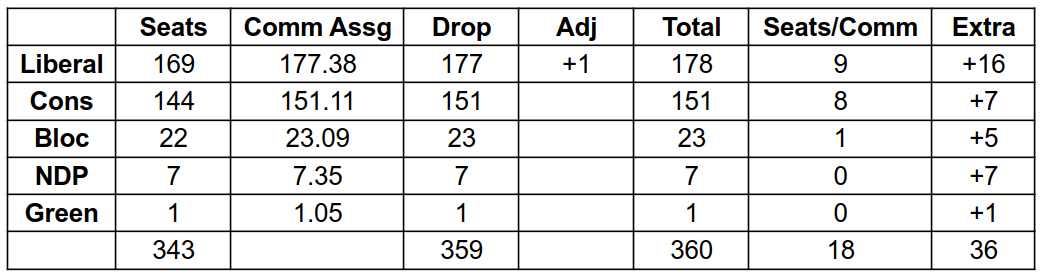
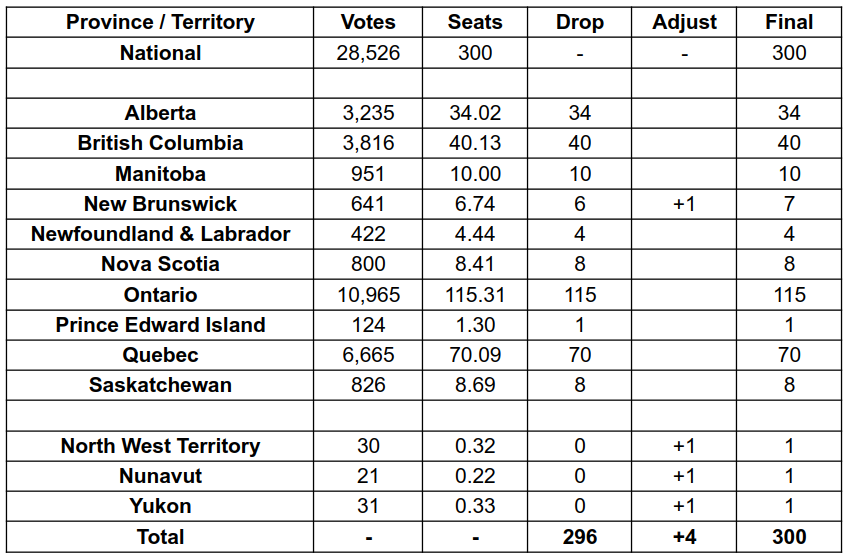
If the dual electoral system were to be used it would have to be decided what the maximum size of the House of Commons should be. A House of Commons of 300 members would give you 150 ridings electing 2 members each. This results in an 11% reduction in the size of the Commons and a 125% increase in the size of the ridings. The Party standings in such a House would roughly be 134 Liberals, 99 Conservatives, 57 NDP, 9 Bloc, and 1 Green.
You can try it before you buy it by forming the House advisory council. This council to consist of the top two candidates for each riding. This giving a council of 676 members all having one vote in regular session. All the other candidates in each riding transfers their popular votes to one of the council members from their riding. This added to their own gives the number of votes they have in the council in legislative session. The Council in regular session advises the Commons on procedural votes and in legislative session advises the House on the passage of legislation.


 The Federalist party of Canada