Category Archives: policy

Government formation part 2

westminster

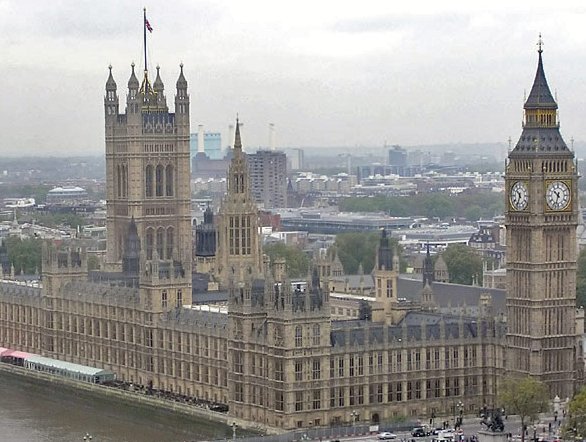
An alternative to the current process used in the United Kingdom and others with the Westminster system. This is using the UK as an example.

  • General election Thursday May 7, 2015
  • Parliament reconvenes on the second Monday after an election. This is 11 days after the election and for this election that is Monday May 18.
  • Monday morning swear in the new members of parliament.
  • Monday afternoon elect the Speaker.
  • Tuesday the Speaker ask the House of Commons to nominate individuals to be called upon to form a government. A nominee must have at least 5% of the membership of the House or 33 members endorsing them.
  • If there is more then four nominees then the four with the most endorsements are called upon to form a council-designate which is a government in waiting. If there are four or less all are called to form a council-designate.
  • Obviously before the UK Parliament meets there will be intensive negotiations behind the scenes to form a majority coalition if no party has the majority.
  • This is done Tuesday morning and later the Speaker of the Commons calls upon Her Majesty to invite the listed individuals to form council-designates.
  • Tuesday afternoon they are called in at 1, 2, 3, and 4 o’clock and are invited by the sovereign to form a governments-in-waiting to be called upon by Her Majesty to form the government should they have the confidence of the House of Commons.
  • Each nominee then forms a council-designate of say 16-24 members that would form the government should it have the confidence of the House.
  • Wednesday morning the Commons then votes on the question, “which of these councils-designate has the confidence of this House to form Her Majesty’s government in this Parliament ?
  • If no council gets a majority then a second vote is held with only the top two from the first vote on it. The council with the majority becomes the Council of Ministers and the runner up council becomes the Council of Opposition.
  • In 2005 the first vote would be something like Labour 411, Conservative 174, and Liberal Democrat 55. Labour forms the government, conservatives the opposition, and the Liberal Democrats an alternate council. After the last election the first and only vote would be something like Coalition (Tory/Lib-Dem) 415 and Labour 217. A coalition government and Labour as the opposition.
  • Parliament would have a fixed term and set election day. You can only have early elections by a motion of dissolution passing the Commons by 480 votes (75%).
  • There are no non-confidence motions. The government serves for the duration of that Parliament unless the Commons passes a motion of dismissal against the government and replaces it with another.
  • Any minister can be removed by a motion of dismissal passed by a 2/3 majority vote with quorum, including the PM.
  • The Council of Ministers can be replaced by a motion of government dismissal passed by an absolute 2/3 majority. This motion must have a nominee for Prime Minister who is called upon to form a new government if the motion of dismissal against the government gets the 434 votes. No member of the defeated government can be included in this new government.

Greater stability since the House of Commons establishes confidence in a government right at the start of a new Parliament and the government serves for the duration of that Parliament which has a fixed term and set election day. Only by super majorities can this be changed. An absolute 2/3 majority to replace the current government with a new one that then serves till the next election or an absolute 3/4 majority vote that actually does dissolve Parliament and triggers new elections. Note the scheduled general election still occurs so instead of having 1 full Parliament that lasts 4 years you have two short Parliaments that last a combined duration of 4 years. The second short Parliament can not be dissolved for early elections.

Acting president: Barry Aulis
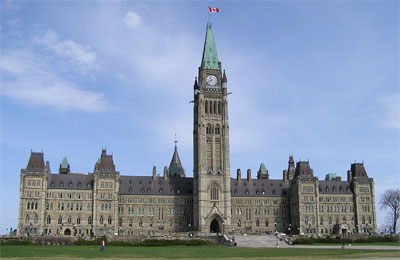
The power of Democracy is vested in the majority and in the minority it’s principle.

parliament

A reformed legislative process.


Legislative motions are either Bills or Resolutions.

Bills if passed by Parliament become Acts of Parliament and have the force of Law.

Resolutions are non-binding legislative motions that if passed by Parliament do not have the force of Law being only an official statement of Parliament.

Only the Council of Ministers (the Government) or Council of Opposition (the Opposition) can introduce Bills.

Resolutions can be introduced by 1% of the House membership or 4 members.

All legislative motions are introduced into the House of Commons.

On Monday all legislative motions are introduced into the House of Commons.

After any legislative motions are introduced notices of motion of closure are given for any legislative motions including the ones just introduced. This notice is given by the sponsor of that legislative motion.

On Tuesday without debate any motions of closure is voted upon. If passed any committee consideration of the legislative motion is stopped and all debate on the House floor for the legislative motion is ended. The legislative motion then goes up for a vote to pass the House of Commons in Legislative session which is every Wednesday afternoon at 1 PM.

To pass a motion of closure requires the following votes as a percentage of the full House.

Just introduced 100% 308 votes (Conservatives+NDP+Liberals+Others)

1 week after introduction 90% 278 votes (Conservatives+NDP+Liberals)

4 weeks after 75% 231 votes (Conservatives+NDP)

13 weeks 67% 206 votes (Conservatives+NDP or +Liberals+Others)

26 weeks 60% 185 votes (Conservatives+NDP or +Liberals)

39 weeks 50% 154 votes (Conservatives)

52 weeks 33% 103 votes (Conservatives or NDP+Liberals or NDP+Others)

On Wednesday the House of Commons goes into legislative session at 1 PM and votes to pass any legislative motions. The government and opposition each get 10 minutes to make a last speech on the Bill/resolution before the vote. If passed it goes to the Senate.

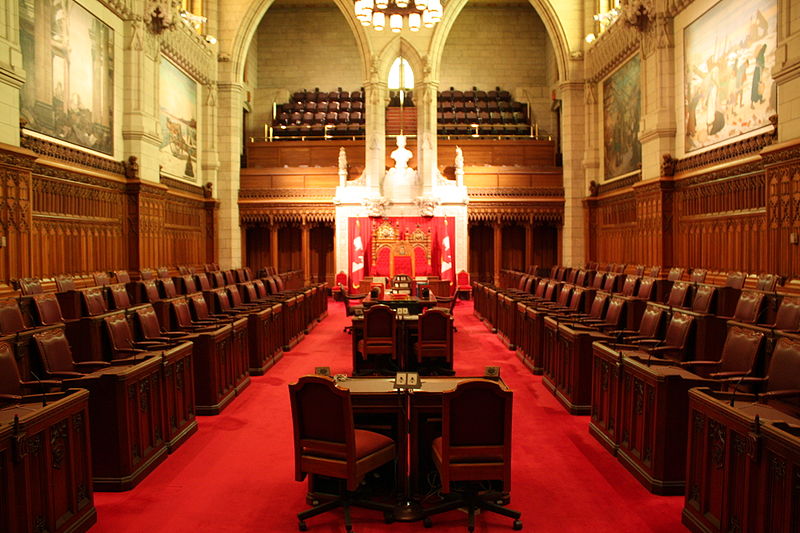
On Thursday the Senate of Canada goes into legislative session at 1 PM and votes on any legislative motions passed by the Commons on Wednesday. If nothing passed the House the Senate will be in regular session.

Any legislative motions that passed the Senate on Thursday are given royal assent on Friday by the Governor-General.

However you set the necessary votes for a motion of closure the two principles remain. The majority can not be blocked from passing something it has the votes for and the minority can not be ignored or overruled by a simple majority vote.

The power of Democracy is vested in the majority and in the minority it’s principle.

She’s leaving on a jet plane

redford_pmnAll her bags are packed she’s ready to go….

Its the process stupid

There should be a Government Service Board of Alberta that provides services to the members of the legislature, executive officers, judicial personal, and the Crown in Alberta. The GSB would be independent with members having a long term of office. One of the services provided by the GSB could be a VIP airplane services for the Premier, Speaker, Chief justice, and Lieutenant-Governor of Alberta. All the services provided by the GSB have a fee which the user can pay for upfront and if they don’t after 120 days its automatically taken out of their salary until the fee is paid. If the user wishes to bill the taxpayers for the services they submit an OEA (Official Expense Appropriation) to the government service board.

The government service board consists of 12 members who’s term of office last for the duration of three legislatures which should be 12 years. At the beginning of each new legislature 4 members are elected, one by the council of ministers, one by the council of opposition, and two elected by a vote of the Assembly Advisory Council which is the top two candidates from every riding. The Council would be 174 members consisting of 86 Conservative 49%, 73 Wildrose 42%, 8 Liberal 5%, and 7 NDP 4%. Every member of the Council can nominate a candidate to be elected to the GSB. The Council by a secret preference ballot elects the top two on the ballot to the GSB. By a secret ballot the members of the council of ministers vote on the remaining candidates nominated by the members of the advisory council. The candidate with the most votes getting elected. After the Cabinet votes the council of opposition votes on the remaining candidates and likewise by a secret ballot elects the candidate with the most votes. This means the GSB would be 6 Conservatives, 4 Liberals, and 2 Wildrose.

When someone wants the taxpayers to pay for the service fee they submit an OEA to the GSB. If they didn’t pay upfront then after 120 days it starts coming out of their salary until the GSB bill is paid for. The weekly meeting of the GSB that’s 90 days after the submission of the OEA the members vote on whether the board considers the OEA as an legitimate expense. If 7 members vote yes the applicant gets 25% of the OEA back, a vote of 8 they get 50%, 9 votes gives 75%, and by 10 votes they receive 100% of the OEA.

If the Premier uses the VIP airplane service that is administered by the government service board they can pay the fee which is based upon the hours of use and distanced travelled. Afterwards they can submit an OEA to the GSB to get reimbursed for the expense. The Premier can use the service and pay later but if they don’t pay in full within 120 days the unpaid amount is automatically taken from their salary until the bill is paid in full.

All meetings of the Government Service Board are ALWAYS open to the public. No Stephen Harper behind closed doors crap. All votes by the GSB are ALWAYS open votes. The members can not serve in any other public office while on the board. In the event of vacancy the Premier and Leader of the Opposition jointly appoint a person to fill the vacancy with the appointment confirmed by a 2/3 majority vote of the Assembly Advisory Council.

President: Barry Aulis


Crown Senate

senateWhat to do with the Senate of Canada? I should email this to all the former Liberal Senators but they are still Senators and they are still members of the Liberal party so whats actually changed? From The Fed the party’s wiki.

Parliament policy / Binding resolution

Title: Crown Senate

 Introduction

The current patronage Senate is to be abolished. The Parliament of Canada in law will establish two advisory bodies to replace it. The Federal senate will replace the current Senate in its capacity of representation by province. The Federal senate will be what is called the triple E Senate namely equal, elected, and effective. The Crown senate will replace the current Senate in its capacity as a chamber of sober second thought. The Crown senate will be non-partisan and not made by patronage appointment. The cost of running the current Senate will go to the advisory councils with each getting 50% of the funds. The salaries of the current senators will likewise go to the members of the advisory councils with each Council getting 50% to be paid equally to each member of that Council.

Be it resolved

It is the national policy of the Federalist Party that a Federalist government shall introduce into Parliament the following.

The Crown senate will advise the Governor General on Royal assent. The Governor General on the advice of the Crown senate can send a bill back to the House of Commons with or without recommendation. This is done by a majority vote of the Crown senate. If the House of Commons passes the bill a second time the Governor General on the advice of the Crown senate can send the bill back to the House of Commons with objections. This is done by a two-thirds majority vote of the Crown senate. If the House of Commons passes the bill a third time the Governor General shall give it Royal assent. The Crown senate can only delay legislation for a limited period of time. It can recommend and object but cannot defeat legislation passed by the elected chambers of Parliament. All crown senators cannot be members, donate, or participate in the activities of any political party.

The Crown senate will have 72 members. Half will be split among the provinces equally with the other half being distributed on the basis of population. Each province will get 3 seats, the three northern territories will get one Senator each, and three seats will be reserved for native Canadians for a total of 36 seats. Population distributes the other 36 seats. The 72 seats are allotted as follows British Columbia 8 seats, Alberta 7, Saskatchewan 4, Manitoba 4, Ontario 16, Québec 12, New Brunswick 4, Nova Scotia 4, Newfoundland 4, Prince Edward Island 3, the northern territories 3, and native Canadians 3. The electors for the Crown Senate are the top two candidates in each riding for the House of Commons. This gives you 616 electors. The membership of the current electors is 38% conservative, 36% NDP, 18% liberal, 7% Bloc, and 1% all others. When a seat goes vacant in a province than any elector from that province may nominate a candidate for that seat. When a seat goes vacant in the northern territories then any elector from any territory may nominate a candidate for that seat. When a seat goes vacant for native Canadians any elector may nominate a candidate. The electors by secret ballot vote yes or no for each candidate with the candidate with the most votes being elected. It shall take a two-thirds majority vote to elect a member of the Crown senate. They shall have a term of 24 years with 3 seats going up for election each year. Crown senators may serve only one term with the exception of a vacancy where the Senator appointed serves out that term and may be appointed to a full term.

Be it further resolved

If there is a Federal senate then by secret ballot the Federal senate in regular session that is one vote per Senator shall confirm by a two-thirds majority vote.

Summary

These two advisory councils are Try it before You buy it. You see how they would actually work as a part of Parliament before making a decision to amend the constitution of Canada. I would have a vote by Canadians in the 43rd federal election that being around 2019 on whether to have a Crown senate and in the 44th federal election around 2023 on whether to have a Federal senate.

Barry Aulis compton-stanstead / QC

barry@barryaulis.ca

Vote                                                                                                                                                                                                                                            The Founder authorized this national policy resolution with no votes in the National assembly, Congress, and Federal council.


This binding policy resolution shall apply only for the 41st Parliament.


Term limits

Title: Tercommonseatm limits

Introduction
With the recent deaths of Senators Ted Kennedy of Massachusetts and Robert Byrd of West Virginia it brings up the question of term limitations. Senator Kennedy was elected to the Senate in 1962 and served for 48 years. Senator Byrd being elected to the Senate in 1958 and serving for 52 years. In my opinion the only person that should be able to celebrate a Jubilee in office is a distinguished little old lady who’s been known to wear a tiara from time to time. I have nothing against long serving members of the Legislature but where re-elections extends that term to 50 years that is simply too long. Both Senator Kennedy and Senator Byrd got elected to the U.S. Senate before I was born and I’m no spring chicken!

Be it resolved
Here in Canada I would suggest that our Members of Parliament would get to serve in six Parliaments this would give them a maximum term of 30 years but in reality much less.

Be it further resolved
That members of the Federalist party be barred from running for the party’s nomination for the House of Commons if they have served as an MP in 6 Parliaments or have been the Federalist’s candidate 8 times.

Summary
For the current Parliament it means for those who were elected in 1997 would be serving in their sixth Parliament (97 / 00 / 04 / 06 / 08 / 11). If the next election is in 2015 that means these MPs would have served in 6 Parliaments for a term of 18 years.