
Category Archives: policy

Senate letter

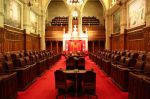
senateSent the following letter the Canada post kind to all the newly appointed Senators.

Reform of Senate membership (by custom and precedence)

Province / Territory

% of voters

Population

Equal

# of Senators

British Columbia

13.03%

4

3

7 (6)*

Alberta

10.89%

4

3

7 (6)*

Saskatchewan

2.98%

1

3

4

Manitoba

3.41%

1

3

4

Ontario

37.29%

12

3

15

Quebec

24.86%

8

3

11

New Brunswick

2.31%

1

3

4

Nova Scotia

2.87%

1

3

4

PEI

0.44%

0

3

3

Newfoundland

1.62%

1

3

4

Yukon

0.10%

0

1

1

NWT

0.11%

0

1

1

Nunavut

0.07%

0

1

1

Total

33

33

66 (64)*

*BC & Alberta limited to a maximum of 6 seats

House advisory council

Party

Liberal

Cons

NDP

Bloc

Green

Ind

Seats

184

99

44

10

1

0

Council

301

223

128

21

2

1

% Council

45%

33%

19%

3%

0.3%

0.1%

The House advisory council consists of the top two candidates in the last election for each riding. The Liberals are brought down to near their percent of the popular vote as a percentage on the council. The Conservatives and NDP are right on their percent popular vote. The Bloc is 3% to 6% and the Greens are just 0.3% on council to a 3% popular vote.

A reform of the Senate membership changed to 66 senators. Each province is granted 3 seats in the Senate with the three northern territories having one each for a total territorial representation equal to a province. This gives you 33 seats with a further 33 seats awarded to the 11 regions on the bases of population. Half the Senate membership of 66 is based on equal representation and the other half on population. When a seat goes vacant the top two candidates in a riding in that province or territory nominate someone for appointment. All the nominees go to a yes or no secret ballot vote of the House Advisory Council. It takes an absolute 2/3 majority (451) to get confirmed. If more then one gets the required vote then the one with the most is appointed. Membership is for 25 years or age 75 after which a senator becomes a senator emeritus. These senators can attend and speak in chamber but can’t sit on any subsidiary body and have no vote. When a senator retires to this position their seat as a voting senator is vacated. To start the membership all current senators stay as long as it doesn’t exceed the number of senators for that province or territory. Any in excess then the most junior senators voluntary resign their seats. Also any who have been there 25 years become a senator emeritus.

The Speaker of the Senate is appointed not on the advice of the PM of the day but a 2/3-majority vote of the Senate by secret ballot. By custom and precedence the Speaker doesn’t speak or vote in the chamber and by Senate rules a tie vote is a no vote. The Speaker also doesn’t serve on any committee. The Speaker serves until retirement, death, or removal. The most senior senator who accepts becomes Deputy speaker of the Senate. This person must be confirmed by a 2/3-majority vote by secret ballot.

The membership of the 18 standing committees is determined as follows. At the start of each Parliament the Senate elects by secret ballot the chairman and deputy chairman of the standing committees who will serve for the duration of that Parliament. The Committees are done in order of precedence set by the Senate. On the last vote for a committee the ballot has the final two candidates on it with the winner being elected as chairman and the runner up as the deputy chairman. These senators serve only on the one committee. All other senators serve on three committees. The senators in order of seniority are asked to choose one committee to serve on. Once all senators have chosen one committee membership the list is done a second time and then finally a last time for their third committee membership.

The current Senate of 88 would be 87 for membership on the committees with the Speaker being ineligible to serve. 36 senators serve as the chairman or deputy chairman on one of the 18 committees. This leaves 51 senators serving on 3 committees giving you (51 X 3 divided by 18) 8.5 members per committee. Nine committees will have 9 members plus the chairman and deputy for a total membership of 11 on the committee. The other 9 committees would have 8 members plus the chairman and deputy for 10 on those committees.

The Senate of Canada is solely a chamber of sober second thought. It is non-partisan and appointment is through a process independent from the Political Monarch (PM) of the day. All appointees can’t be members of political parties or association. They cannot donate to such organizations or attend any of their meetings. The House of Commons establishes a legislative session where any bills to be passed is voted on each week. This is to be Wednesday at 1 PM. The Senate’s legislative session would be Thursday at 1 PM where any bill that passed the House on Wednesday is voted on. If passed by the Senate the bill goes to the Governor General on Friday for royal assent. There would be no Government or Opposition leaders in the Senate. Its relationship to the executive would as the US Congress. It could summon Ministers and Opposition critics to testify and give information to the committees. The Speaker the day after a bill is introduced into the House summits it to the Senate. The bill then goes to the appropriate committee. When the bill is voted on is determined by when the House votes on it.

The Senate by a majority vote may send a bill back to the House with or without recommendations. The next week in the Commons the bill can be withdrawn, voted on, or tabled for revision. If the sponsor withdraws the bill, it kills it. The sponsor can have the bill voted on “as is” for a second time on Wednesday’s legislative session. The bill can be tabled for revision in which case the sponsor has 90 days to introduce a revised bill or the bill is deemed withdrawn from consideration by the House. The second time the Senate gets a bill by a 2/3 majority it can send it back to the House with objections. If the bill passes the Commons for the third time the Senate passes the bill and sends it to the Governor General. Thus the Senate at most can delay any bill by 2 weeks.

As long as the Senate is partisan-appointed and partisan in operation it cannot be a sober chamber of second thought. As long as it is not elected it has no right to block legislation passed by the House of Commons. A New Year and maybe Senate reform for 2016. I have sent an earlier version of this letter to all the “Liberal” Senators over the last 5 months and to any new Independent Senators, so now to you. Congratulations on your appointment to the Senate of Canada.

Sincerely yours,

 

Saskatchewan Election 2016

sask_election_2016The results of the 2016 General election. The one Independent is Jason Dearborn in Kindersley. The winner was Billy Boyd of the Saskatchewan party.


Party

Saskatchewan

NDP

Other parties

Ind

% of Vote

63%

30%

7%

0.4%

Seats

51

10

0

0

Dual Seats

61

60

0

1*

Dual Leg.votes

64-69%

31-36%

0

0.5%

Dual Electoral System

42nd Federal election results

Party

Liberal

Cons

NDP

Bloc

Green

Ind

Seats

184

99

44

10

1

0

Dual

301

223

128

21

2

1

House votes

54%

29%

13%

3%

0.3%

0%

Dual votes

51%

29%

18%

3%

0.5%

0.1%

With Liberal/Cons members elected the NDP & Bloc & Green go to the Liberals

Liberal/NDP members elected the Bloc & Green to NDP , Cons 2/3 to Liberals

Cons/NDP members elected the Liberal & Bloc & Green to the NDP

Liberal/Bloc members elected the NDP & Green & Cons 1/2 to each

NDP/Bloc members elected the Liberal & Green to NDP , Cons 1/2 to each

Dual Electoral System

A preference ballot is used for voting. The candidate with the number one on a ballot gets one vote. The two candidates with the most votes are elected. The ballots are counted a second time with the elected candidate with the lower number getting one vote. Each elected member will have one ” member vote ” in the House to be used in regular sessions and one ” legislative vote ” for each vote received on the second count of the ballots. These votes are voted when the House is in legislative session and is used to pass, what else, legislation! One day a week is set by the Commons for the legislative session and any bills requiring third reading are voted on during that session.

The main drawback of this system is if you keep the same number of ridings you will double the number of members or having the same number of members will double the size of the electoral ridings.

Benefits of the Dual Electoral System

  1. Guarantee of an opposition since no party can have more than 50% of the members.
  2. In regular sessions the members have one vote each so there will be non-partisan voting on the election of the Speaker, rules of the House (2/3 majority), procedural motions and committee membership.
  3. In legislative session you will have proportional representation since each member will have one vote for each vote received on the second count of the ballots.
  4. No party lists since your still voting for the Member of Parliament of your choice. One MP represents the majority vote in a riding and the other MP the main minority vote.
  5. No major revision of the electoral map. Ridings should only be altered when the number of electors in a riding is 50% or less of the number of electors in the largest riding. Each election few if any ridings will change. This will mitigate the political fighting over riding boundaries or size for the purpose of any real or imagined partisan gain.
  6. An incentive to vote since the more votes an MP gets the more votes they have on voting on legislation. Also ridings will increase their voting strength in the House if their voting turn out is higher than the average.
  7. All votes do count! If your first choice doesn’t get elected then one of the two candidates who did get elected will get to vote your vote because of the preference ballot.

If the dual electoral system were to be used it would have to be decided what the maximum size of the House of Commons should be. A House of Commons of 300 members would give you 150 ridings electing 2 members each. This results in an 11% reduction in the size of the Commons and a 125% increase in the size of the ridings. The Party standings in such a House would roughly be 134 Liberals, 99 Conservatives, 57 NDP, 9 Bloc, and 1 Green.

You can try it before you buy it by forming the House advisory council. This council to consist of the top two candidates for each riding. This giving a council of 676 members all having one vote in regular session. All the other candidates in each riding transfers their popular votes to one of the council members from their riding. This added to their own gives the number of votes they have in the council in legislative session. The Council in regular session advises the Commons on procedural votes and in legislative session advises the House on the passage of legislation.


Base Wage

queen-s-park


The Ontario public service wage act

http://www.cbc.ca/beta/news/canada/toronto/ontario-sunshine-list-1.3505138

The wages of all who work in the public service whether in the executive, bureaucracy, legislature, or judiciary should be based upon what is happening to those who pay those wages, namely the taxpayers. The concept of the base wage is simple for the proceeding year calculate the average income of those who are not retired. This is to exclude those who work for any level of government. Figure out the average monthly unemployment rate to two figures for that year. Reduce the average income by the unemployment rate and divide by 52. This gives you the base wage for that municipality, province, or the nation.

From StatsCan I got the following figures for the province of Ontario for 2015. Average annual wage of $50,781 and an average unemployment rate of 6.8%. The equation is (50,781 – 6.8%) / 52 = 910.15. The base wage is the first number to two significant figures that is equal to or greater than that amount which in this case is $920.

All salaries within the provincial government of Ontario would be paid an amount that is a percentage of the Ontario base wage of $920. It is calculated for the proceeding year and takes effect starting the first pay check on or after July first of every year. If unemployment goes up the public wages go down and if it goes down then those wages go up. If the average income of the taxpayers go up so does the base wage and if it goes down then on July the first so does the salaries of all public employees, top to bottom. I would set an amount that the wages can not go below.

For example set the general office worker at 65% the base wage. After 1 year it’s to go up to 70%, after 3 years to 75%, 5 years in the public service 80%, 10 years to 85%, and after 20 years it goes to the maximum of 90%. The process being the wages for any job classification starts at a certain percentage and increase for experience and seniority to a maximum after a set number of years. Those that are a specific position like premier or MLA or deputy minister for transport is a set percentage that doesn’t change.

Real Change Senate Appointments

g3403http://www.cbc.ca/news/politics/senate-appointments-liberal-1.3496977

Just like Harper with Viceregal appointments the new Political Monarch (PM) creates a process for Senate appointments that doesn’t remove the PM of the day out of that process. The more things change the more the remain the same. The process is created by the PM of the day, changed by the PM, or cancelled at the pleasure of the PM and it still has the PM making the appointments so they can simply ignore the very process they create.

By an Act of Parliament the Governor-General makes Senate appointments on the advice of the House advisory council. This body is the top two candidates in each riding in the last election giving you the following membership.

Party

House seats

Council seats

% on council

Liberal

184

301

45%

Cons

99

223

33%

NDP

44

128

19%

Bloc

10

21

3%

Green

1

2

0.3%

Ind

0

1

0.1%

When a Senate seat goes vacant the two members from the same riding of any riding in that province or territory can nominate someone for appointment. The House advisory council by secret ballot votes yes or no for each candidate. To be recommended for appointment takes an absolute 2/3 majority (451) voting yes for that nominee. In the event of more then one getting 451 votes the one with the most votes is appointed. If there is a tie then the Governor-General has personal discretion to choose which of the tied nominees to appoint.

A non-partisan vote since no party can have more than 50% of the seats. The PM of the day will not create a process that removes the PM (Political Monarch) from the appointment process BECAUSE it removes the PM from the appointment process.