Category Archives: News

Les Nessman

les nessman1The Les Nessman of Revenue Canada has just called. Naughty, naughty, you got caughty!

You have made deduction claims that you’re not entitled to so what happens ? There’s an investigation to establish the amount you owe then a review if you dispute that amount. Why couldn’t that have done with Senators Mike Duffy, Pamela Wallin, and Patrick Brazeau? Establish the amount of fraudulent expense claims for each and they lose their full weekly salary until the loss of income equals or exceeds that amount. No RCMP, No PMO, and No Stephen Harper tossing more conservatives under the bus!

Using Senator Brazeau as an example he owes $48,745 for inappropriate expense claims. The base salary of a Senator is $135,200 annually or $2,600 a week so he loses his salary for 19 weeks or $49,400. A first offense you lose your salary and with a second then consider suspension. With a third offense suspension should always be the penalty.

Acting president Barry Aulis
Nova Scotia Election

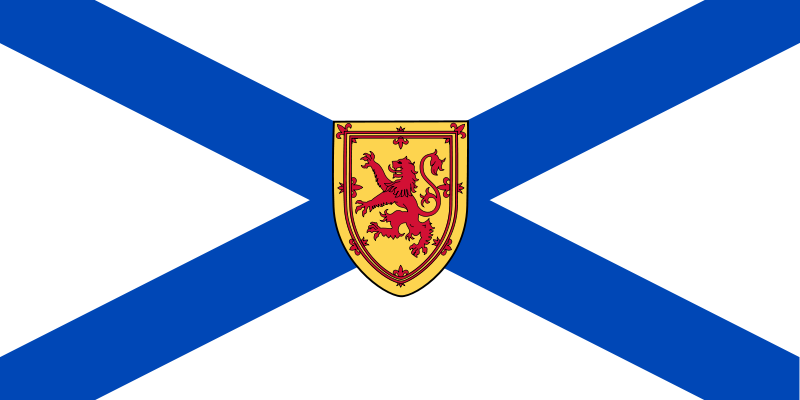
Nova_ScotiaIn the recent provincial election in Nova Scotia the Liberals got 65% of the seats with 45% of the vote so much for representative. Here’s a comparison using the dual electoral system.

Dual Electoral System: A preference ballot is used for voting. The candidate with the number one on a ballot gets one vote. The two candidates with the most votes are elected. The ballots are counted a second time with the elected candidate with the lower number getting one vote. Each elected member will have one ” member vote ” in the House to be used in regular sessions and one ” legislative vote ” for each vote received on the second count of the ballots. These votes are voted when the House is in legislative session and is used to pass what else, legislation! One day a week is set by the Assembly for the legislative session and any bills requiring third reading are voted on during that session. http://thegreybook.wikispaces.com/Dual+electoral+system

Party

% Vote

Seats

Dual Seats

Legislative votes

Liberal

45%

33

44

51% +/- 2%

NDP

27%

7

34

26% +/- 2%

Conservatives

27%

11

24

23% +/- 2%

Maria Mourani

442_1_jpg_142x230_autocrop_q85A Leader of a Federal party unilaterally expelling one of it”s MPs from caucus not for any vote in the Commons but for an opinion that contradicts the Leader’s position not on federal policy but on a PROPOSED law in Quebec.

Maria Mourani, who was kicked out of the Bloc Québécois caucus over her opposition to the Parti Québécois’ proposed charter of Quebec values, says she has decided to quit the party.

Mourani told reporters gathered at a press conference in her home riding of Ahuntsic in Montreal Friday morning that she was very saddened by the turn of events, which have left her questioning her involvement within the sovereigntist movement.

“Was my expulsion from the Bloc the conclusion of a succession of events in which an election-driven strategy took precedence over the defense of basic human rights?” Mourani said. “I wonder.”

From the provisional constitution

11.4    The National caucus shall consist of all Party members who are members of the House of Commons. The caucus by an absolute two-thirds majority vote can suspend an MP from caucus.

12.3    Key resolutions need three-quarter majorities to be passed in the National Assembly and National Congress. The Federal Council must also pass such resolutions with a two-thirds majority vote. Key resolutions are motioned in the National policy committee. These resolutions form the National Party Platform and are binding upon a Federalist government and all Federalist MPs. Each Federalist MP can vote as they choose in the House of Commons. They may vote against a key resolution without penalty a number of times in each Parliament equal to the number of times they have been elected to the Commons.

If you wont to change our politics you must first start with the parties. Barry.

Senate scandal

mike duffy

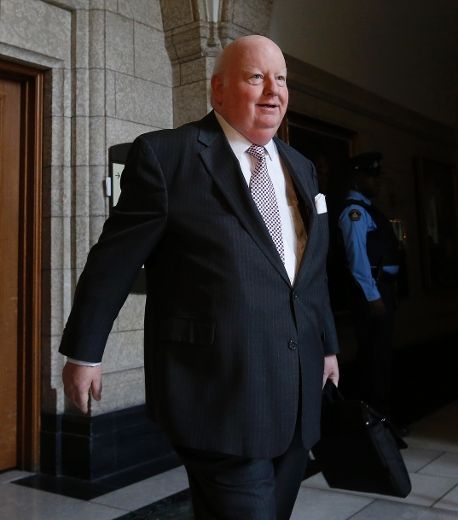
Just call him Mike “show me the money” Duffy. I’ve lived long enough where these spending scandals are just so “old liberal” been there seen that. Here below is a different way to handle Official expenses.

Article 6.5 of the party’s provisional constitution states: All senior and junior Officers of the Party are appointed by order of the Executive. Executive Officers and terms of the Officers shall be set in a National officers bylaw.

The National officers’ bylaw would set the terms and compensations of the officers of the party. Under the draft I have written but not published the senior officers of the party are full time positions and receive the following benefits.

  • A weekly salary of X times the base wage. The base wage is an amount of money set by the National executive and all compensations are a multiple of this amount. When you change it you change the financial benefits of everybody top to bottom.
  • A monthly contribution to their RRSP of X times the base wage. This is their pension.
  • The ability to submit to the National executive an OEA an Official Expense Appropriation. The National executive by a majority vote by secret ballot can reimburse the officer of 25% of the OEA, by a 60% vote 50% of the OEA, by a two-thirds majority vote 75%, and by a three-quarters majority vote the entire amount of the OEA. A motion in the National Assembly can overrule this decision. The officer who made the OEA or a member of the Assembly under its standing orders can make this motion. Any decision by the National Assembly is final. The party is under no obligation to reimburse any Official Expense Appropriation.

All senators should only have 2 compensations, a weekly salary, and the ability to submit to the senate an OEA for reimbursement of expenses incurred for official duties. It would be at the senate’s sole discretion to reimburse a senator’s OEA and to what amount. Each senator should submit an OEA for each month separated into reoccurring and non-reoccurring expenses.

BC election

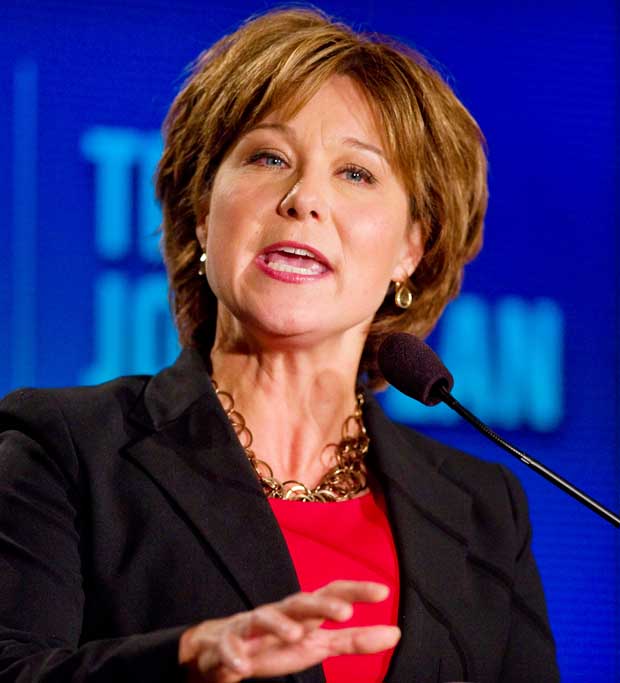
Insteadchristyclark of Premier Clark having to ask a Liberal MLA to resign their seat it would be better to create in the BC Assembly’s rules non-voting members. Here from manifesto 42 on the party’s wiki is a policy resolution to do that for the House of Commons.

 ​​Title: House delegates

Introduction


Non-voting members of the House of Commons
Under the standing orders of the House of Commons there shall be created a class of members called House delegates who can motion and debate but have no seat on any committee and no vote in the House of Commons.

Be it resolved


Delegates can be created by an absolute two-thirds majority vote (206) of the Commons. These delegates have a term of office for the duration of that parliament. A House delegate called a Member-emeritus can be created by an absolute three quarters majority vote (231) of the Commons. A Member-emeritus serves for the duration of five parliaments starting with the one in which they are created. All Speakers of the House become a Member-emeritus in the Parliament after they retire.

Be it further resolved


There shall be ex-officio House delegates who are any member of the Council of Ministers or the Council of Opposition who does not have a seat in the House of Commons. Furthermore both the Prime Minister and the Leader of the Opposition shall only be House delegates. If they are members of the House of Commons at the time of appointment as Prime minister or Leader of the opposition they then shall resign that seat in the House of Commons. Also if any leader of an official political party does not have a seat in the House of Commons they shall become a delegate member of the Commons. The status of an official political party shall be granted to any party, which got 5% or more of the popular vote in the last election or who has 1% or more of the membership in the House of Commons.

Summary


What does this change federally? It means that the House of Commons would have 308 voting members plus 3 House delegates. The three House delegates would be the Prime Minister Stephen Harper, the Leader of the Opposition Mr. Thomas Muclair, and the Leader of the Bloc Mr Daniel Paille. There could be more delegate members of the House of Commons depending on whom the Prime minister and the Leader of the opposition appoints to the Cabinet or the Council of opposition. Both the prime minister and the leader of the opposition become solely national leaders without any responsibilities attending the office of Member of Parliament. Also their ridings will have full time MPs serving their constituents.

Author


Barry Aulis compton-stanstead / QC