Category Archives: News

Rebranding

Re-branding the Government of Canada Stephen Harper style.

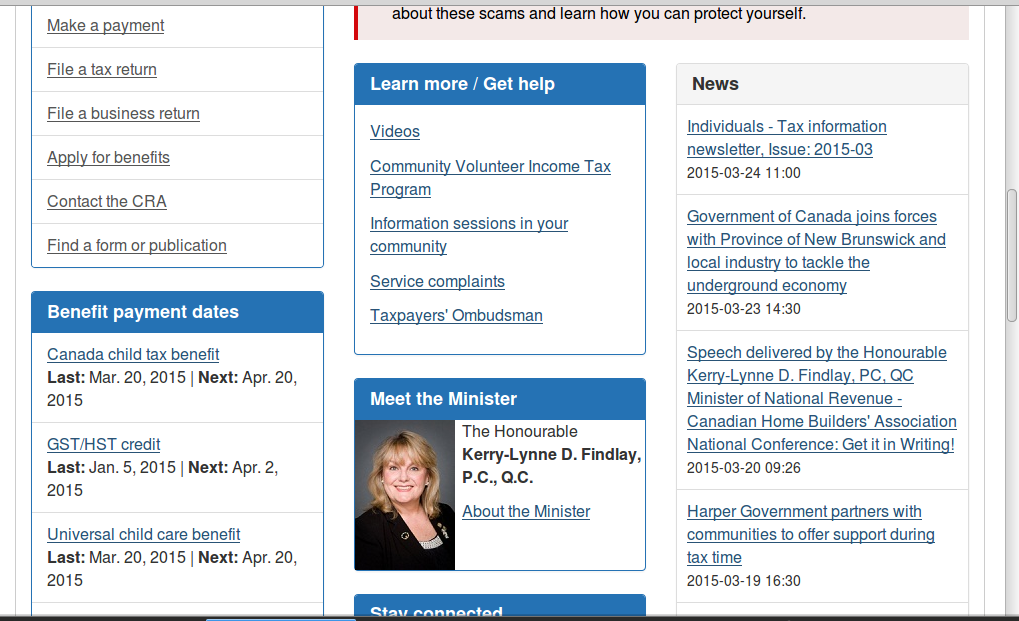
See anything wrong with the picture?

Screen1

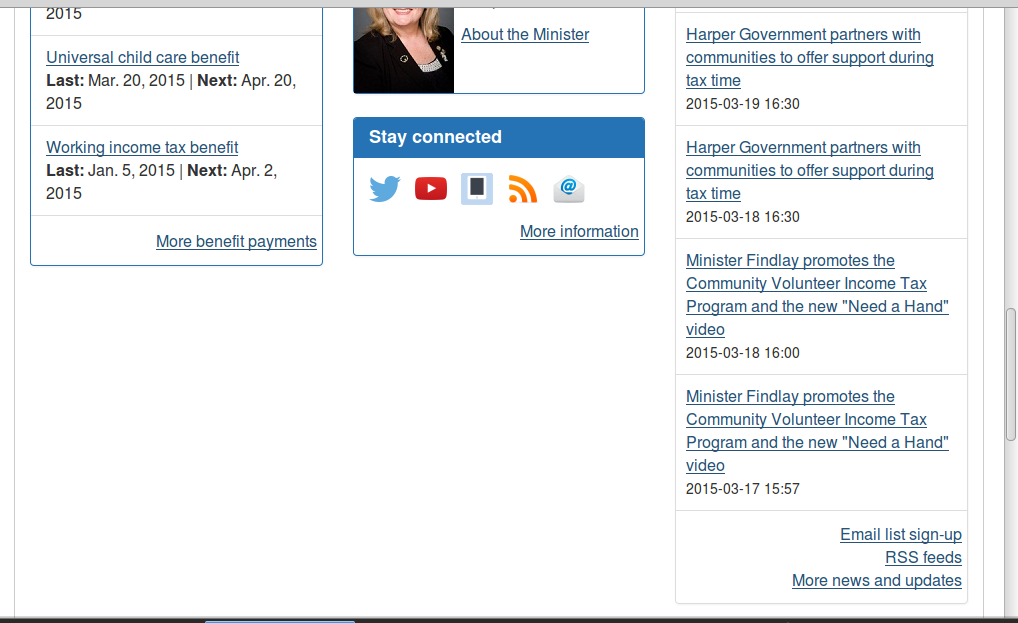
How about this one?

These are screens shots from Revenue Canada’s home page. Taken March 25

Screen2

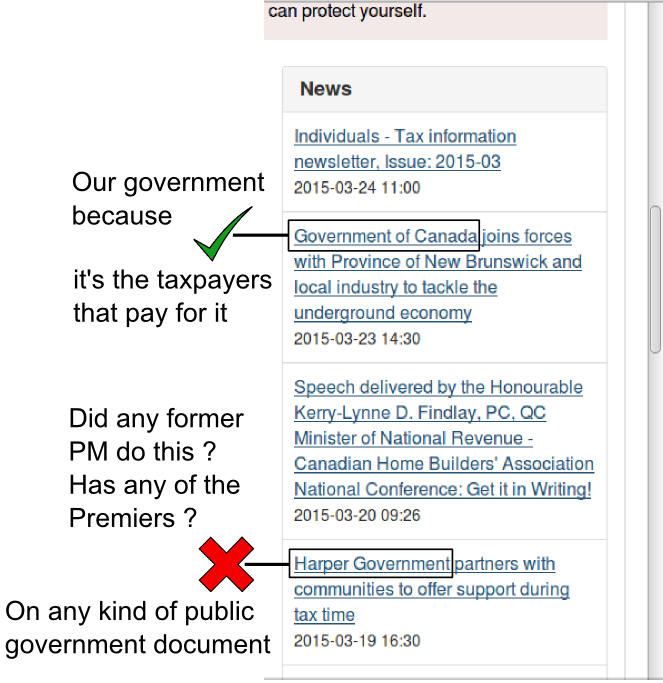
Close up of the right pane under news. I came across this before when doing my taxes in 2014. I copied the web address but didn’t take a screen shot. The address doesn’t go to any web page now.

g4114

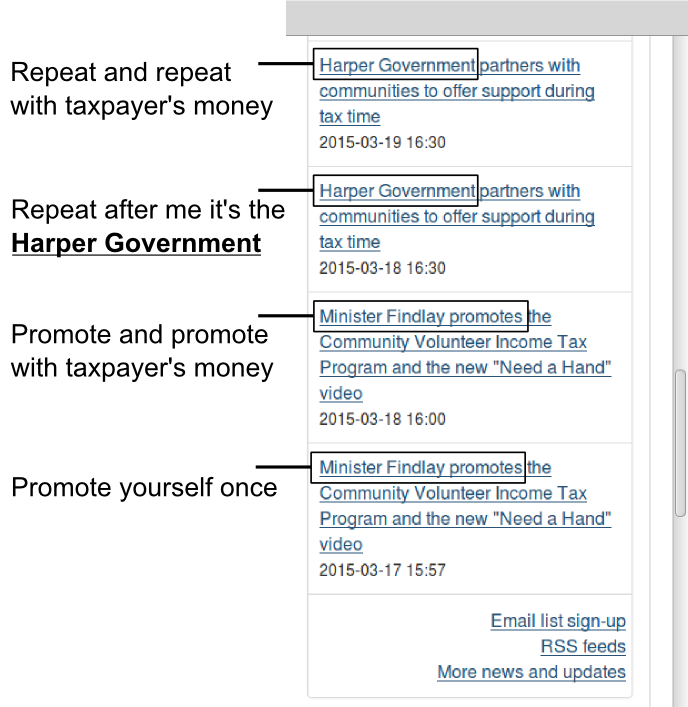
Oldest at the bottom and newest at the top. Repeat after me it’s the Harper Government and not the Government of Canada.

g4543

Acting President: Barry Aulis

I remember the roll out of Canada’s New government phrase but didn’t know that afterwards they shifted to the “Harper Government”. To me this is illegal, he is not the owner and if the real owners don’t seem to care. What’s to be done? If a government you support can do this than a government you oppose can do it as well. Do you design the system fail safe or fail deadly?

Government formation

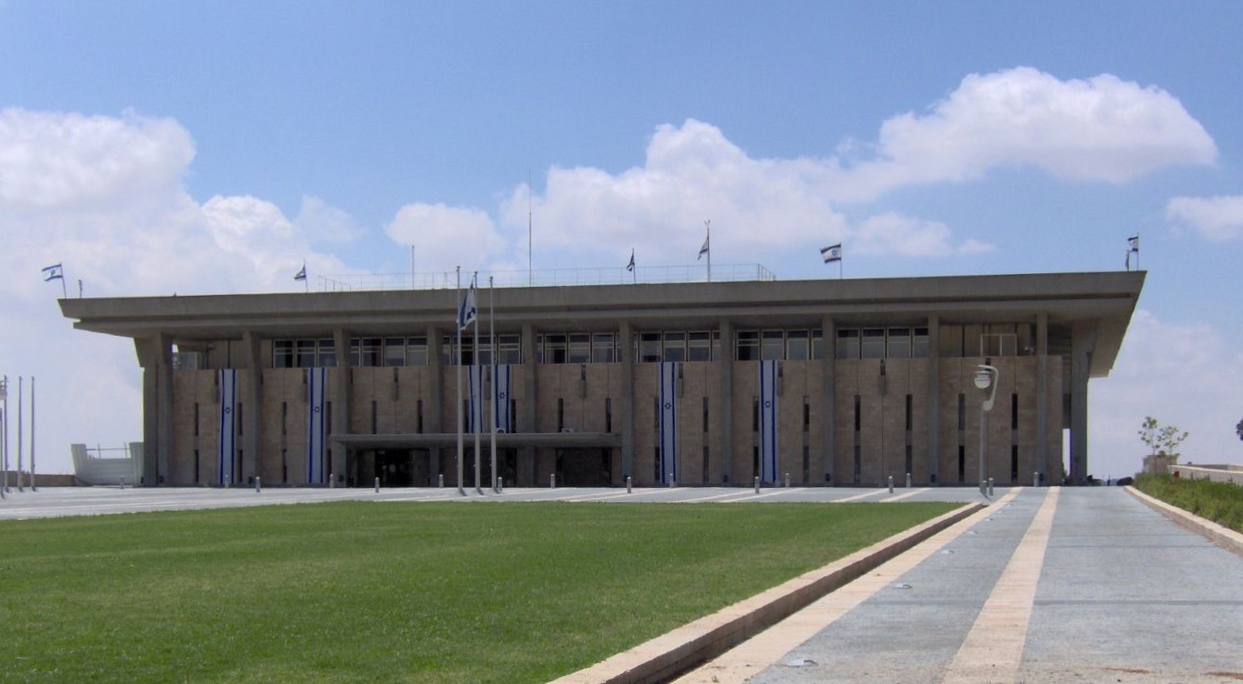
IM000791.JPGAn alternative to the current process used in Israel.


  • Swear in the new members of the Knesset.
  • Elect the Speaker.
  • The Speaker ask the Knesset to nominate individuals to be called upon to form a government. A nominee must have at least 6 members endorsing them (5%).
  • If there is more then four nominees then the four with the most endorsements are chosen.
  • Obviously before the Knesset meets there will be intensive negotiations behind the scenes to form a majority coalition.
  • Each nominee then forms a council-designate of say 14-20 members that would form the government should it have the confidence of the Knesset.
  • The Knesset then votes on the question, “which of these councils-designate has the confidence of the Knesset to form the government of Israel in this Knesset.
  • If no council gets a majority then a second vote is held with only the top two from the first vote on it.
  • The council with the majority becomes the Council of Ministers and the runner up council becomes the Council of Opposition.
  • The Knesset has a fixed term and set election day. You can only have early elections by a motion of dissolution passing the Knesset by 90 votes (75%).
  • There are no non confidence motions. The government serves for the duration of the Knesset unless the Knesset passes a motion of dissolution or a motion of dismissal against the government and replaces it with another.
  • Any minister can be removed by a motion of dismissal passed by a 2/3 majority vote with quorum, including the PM.
  • The Council of Ministers can be replaced by a motion of dismissal passed by an absolute 2/3 majority (80). This motion must have a nominee for Prime Minister who is called upon to form a new government if the motion of dismissal against the government gets the 80 votes. No member of the defeated government can be included in this new government.

Greater stability since the Knesset establishes confidence in a government right at the start of a new Knesset and the government serves for the duration of that Knesset which has a fixed term and election day. Only by super majorities can this be changed. An absolute 2/3 majority to replace the current government with a new one that then serves till the next election or a 3/4 majority vote that actually does dissolve the Knesset and triggers new elections.

Olivia Dorey

oliviadoreyOlivia Dorey

The budget is done in budgetese for the same reason that legal is done in legalese. The purpose is to deny outsiders the ability to understand and where possible access too the sacred writings that is restricted to only the members of the ordained priesthood. I wish her all the luck in the world she is going to need it. This is why I founded the Federalist party of Canada. If you wont to change this kind of crap you are going to have to start with the political parties themselves. In the way they are operated by insiders is no different. The tag-line says it

If you wont our politics to change you must first change our political parties.


Preston Manning

Preston-ManningPreston Manning apology Wildrose defections

I agree with Mr. Manning about how these Wildrose MLAs jumped ship. He shouldn’t take any blame for the way in which they did it especially Ms. Smith. The Leader of any political party has extra responsibility since the membership chose that person to lead not do what she did. If she wants to join another Party she can step down as Leader and when an interim Leader is selected announce that she is crossing the floor to sit as a PC in the Alberta Legislature. For any sitting member of a legislature if they want to change Parties that is their choice in a free democratic system. The way it should be done is at a special meeting of their Party’s riding association. Give the members of the riding executive a copy of your resignation as a member of that Party and tell the attending members of the association why you are doing it.

When I quit the NDP in 2009 I was the riding president here in Compton-Stanstead. I quit because the NDP had just decreed a new rule that stated in order to run for the NDP nomination you had to be first approved by the national director of the NDP. Wrong! All you have to be is a member in good standing in the riding and eligible to run for the House of Commons. The NDP was having a national convention that year and I stayed on to do the paper work so that the only member in the riding who wanted to go wouldn’t have any run around with the Montreal or Federal office. After he got back I then emailed the riding membership that I was the leaving the Party, no replies, and submitted a real letter to the President of the Quebec wing. I stated my objection to this new rule and asked about the election material from the 2008 campaign where I was the official agent, inquired about settlement of the riding account, and suggested a few candidates to be riding president.

Those with political memories will recall another woman who did this at the federal level though at least she wasn’t the Leader of the Party and we all know what happened to her political aspirations.

Fixed date elections

Unnecessary early elections caused by the political monarch (PM) in Japan and Israel. Japan’s last election was in December 2012 and for Israel the last election was January of 2013.

Instead have a fix date for elections just like we have for our municipalities and separate the vote for the executive and legislature. Again we do this for our municipalities it’s time to run our provincial and federal systems the same way.

A set election day for all elections in Canada say the first Monday of October of each year. In 2015 and every four years after you have the Federal elections. In 2017 and every four years after you have the elections for the provincial governments. In even numbered years you would have municipal elections. All occurring on the set election day.

Separate votes for the executive and the legislative just like we have separate votes for a mayor and the municipal council. This means getting rid of confidence motions since in effect confidence is set by a majority vote of the voters directly. Federally the candidates for the last election in each riding whether a by-election or the general endorses a council-designate of 16 to 20 members. These Councils are formed by any member of the House of Commons nominating an individual to form a proposed government. If they accept they appoint people to the ministerial portfolios in a council-designate of 16 to 20 members. When the Members of Parliament endorse a Council they have votes equal to their popular vote in the last election in their riding. The four most endorsed Councils get on the confidence-ballot. A significant catch is that no one on one of these Councils can run for the Commons simultaneously. Just as you can’t run for mayor and the city council at the same time.

In all likelihood this will give 3 council-designate on the confidence-ballot. The question being “Which of these council-designate do you have confidence in to serve as the Council of Ministers in the next Parliament of Canada”. You would have the choice of the Conservative party the Leader Stephen Harper, the New Democratic Party the Leader Thomas Muclair, and the Liberal party the Leader Justin Trudeau. A preference ballot where you mark your first choice, your second choice, and of course your last choice to form the next government. Count the ballots once and if no Council has a majority count a second time with just the top two. Winner becomes the Council of Ministers for the next Parliament and the runner-up the Council of Opposition.

No confidence motions but all members of the cabinet and the opposition council are subject to the disciplinary motions of reprimand, censure, suspension, and dismissal. A motion of reprimand requires an absolute 1/3 + 1 majority in the Commons (113 out of 338). A reprimand is the proverbial slap on the wrist. A motion of censure carries with it a loss of 1 weekly paycheck and requires an absolute majority (170). Each additional censure increases the loss of an additional weekly paycheck. You can be censured a maximum of 4 times in each Parliament. A motion of suspension takes an absolute 60% vote (203) and suspends the member for 90 days with the loss of pay for that time. You can be suspended a maximum 3 times in a Parliament. A motion of dismissal takes an absolute 2/3 majority to pass (226) and results in the member of the Council of Ministers or Council of Opposition being dismissed from office.