Category Archives: Founder

Quebec election

pmAnother election triggered by a wave of the hand of the political monarch (PM). If its good enough for the National Assembly to pass legislation setting municipal elections to a fixed 4 year term on a set date then why is the same not good enough for the Quebec government?

Set Quebec elections for a set date every 4 years. Separate the vote for the executive and legislature. The Quebec voters directly vote for who they have confidence in to be the government in the next parliament. The top 4 councils nominated by the National Assembly are on the ballot in an executive vote the same as voting for a mayor in local elections. No more then 6 candidates for the National Assembly in a legislative election. No more confidence motions they are replaced by a motion of dismissal that can dismiss a minister by a two thirds majority vote of the National Assembly with the premier dismissed by an absolute two thirds majority (84). These means getting rid of the Westminster style of government and replacing it with the provincial version of our municipal governments. This is 21st century Quebec not 19th century Britain.

Crown Senate

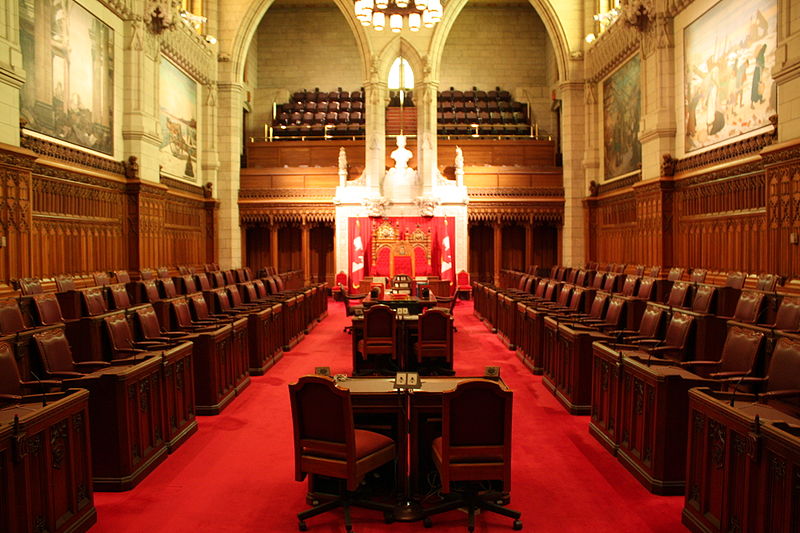
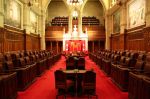
senateWhat to do with the Senate of Canada? I should email this to all the former Liberal Senators but they are still Senators and they are still members of the Liberal party so whats actually changed? From The Fed the party’s wiki.

Parliament policy / Binding resolution

Title: Crown Senate

 Introduction

The current patronage Senate is to be abolished. The Parliament of Canada in law will establish two advisory bodies to replace it. The Federal senate will replace the current Senate in its capacity of representation by province. The Federal senate will be what is called the triple E Senate namely equal, elected, and effective. The Crown senate will replace the current Senate in its capacity as a chamber of sober second thought. The Crown senate will be non-partisan and not made by patronage appointment. The cost of running the current Senate will go to the advisory councils with each getting 50% of the funds. The salaries of the current senators will likewise go to the members of the advisory councils with each Council getting 50% to be paid equally to each member of that Council.

Be it resolved

It is the national policy of the Federalist Party that a Federalist government shall introduce into Parliament the following.

The Crown senate will advise the Governor General on Royal assent. The Governor General on the advice of the Crown senate can send a bill back to the House of Commons with or without recommendation. This is done by a majority vote of the Crown senate. If the House of Commons passes the bill a second time the Governor General on the advice of the Crown senate can send the bill back to the House of Commons with objections. This is done by a two-thirds majority vote of the Crown senate. If the House of Commons passes the bill a third time the Governor General shall give it Royal assent. The Crown senate can only delay legislation for a limited period of time. It can recommend and object but cannot defeat legislation passed by the elected chambers of Parliament. All crown senators cannot be members, donate, or participate in the activities of any political party.

The Crown senate will have 72 members. Half will be split among the provinces equally with the other half being distributed on the basis of population. Each province will get 3 seats, the three northern territories will get one Senator each, and three seats will be reserved for native Canadians for a total of 36 seats. Population distributes the other 36 seats. The 72 seats are allotted as follows British Columbia 8 seats, Alberta 7, Saskatchewan 4, Manitoba 4, Ontario 16, Québec 12, New Brunswick 4, Nova Scotia 4, Newfoundland 4, Prince Edward Island 3, the northern territories 3, and native Canadians 3. The electors for the Crown Senate are the top two candidates in each riding for the House of Commons. This gives you 616 electors. The membership of the current electors is 38% conservative, 36% NDP, 18% liberal, 7% Bloc, and 1% all others. When a seat goes vacant in a province than any elector from that province may nominate a candidate for that seat. When a seat goes vacant in the northern territories then any elector from any territory may nominate a candidate for that seat. When a seat goes vacant for native Canadians any elector may nominate a candidate. The electors by secret ballot vote yes or no for each candidate with the candidate with the most votes being elected. It shall take a two-thirds majority vote to elect a member of the Crown senate. They shall have a term of 24 years with 3 seats going up for election each year. Crown senators may serve only one term with the exception of a vacancy where the Senator appointed serves out that term and may be appointed to a full term.

Be it further resolved

If there is a Federal senate then by secret ballot the Federal senate in regular session that is one vote per Senator shall confirm by a two-thirds majority vote.

Summary

These two advisory councils are Try it before You buy it. You see how they would actually work as a part of Parliament before making a decision to amend the constitution of Canada. I would have a vote by Canadians in the 43rd federal election that being around 2019 on whether to have a Crown senate and in the 44th federal election around 2023 on whether to have a Federal senate.

Barry Aulis compton-stanstead / QC

barry@barryaulis.ca

Vote                                                                                                                                                                                                                                            The Founder authorized this national policy resolution with no votes in the National assembly, Congress, and Federal council.


This binding policy resolution shall apply only for the 41st Parliament.


Term limits

Title: Tercommonseatm limits

Introduction
With the recent deaths of Senators Ted Kennedy of Massachusetts and Robert Byrd of West Virginia it brings up the question of term limitations. Senator Kennedy was elected to the Senate in 1962 and served for 48 years. Senator Byrd being elected to the Senate in 1958 and serving for 52 years. In my opinion the only person that should be able to celebrate a Jubilee in office is a distinguished little old lady who’s been known to wear a tiara from time to time. I have nothing against long serving members of the Legislature but where re-elections extends that term to 50 years that is simply too long. Both Senator Kennedy and Senator Byrd got elected to the U.S. Senate before I was born and I’m no spring chicken!

Be it resolved
Here in Canada I would suggest that our Members of Parliament would get to serve in six Parliaments this would give them a maximum term of 30 years but in reality much less.

Be it further resolved
That members of the Federalist party be barred from running for the party’s nomination for the House of Commons if they have served as an MP in 6 Parliaments or have been the Federalist’s candidate 8 times.

Summary
For the current Parliament it means for those who were elected in 1997 would be serving in their sixth Parliament (97 / 00 / 04 / 06 / 08 / 11). If the next election is in 2015 that means these MPs would have served in 6 Parliaments for a term of 18 years.

Members of Parliament & Senators salary

CBC NewsCanadianParliament

Key resolution from the National policy platform

Employment compensation reform

Title: Base wage act

Introduction
The original idea came from a political cartoon in the 80s showing Brian, John, and Ed on the UP escalator and the general Canadian workforce on the DOWN escalator. This representing wages for each but it’s the taxpayers of that general workforce who pay the salaries of Mr. Mulroney, Turner, and Broadbent! The salaries of those in the public sector should be aligned in some manner with those of the private sector.

Be it resolved
It is a plank in the national platform of the Federalist Party that a Federalist government shall introduce into Parliament and the Federalist Members of Parliament shall vote for a base wage act.

All salaries and benefits paid to those hired by the government of Canada shall be a multiple of the base wage this is called the base wage multiplier (BWM). The base wage is set solely by the House of Commons with a motion of adjustment passed by the House by a two-thirds majority vote. The base wage is to be currently set at $900.

Be it further resolved
That Statistics Canada by April first of each year shall determine the average annual full time salary and the average monthly unemployment rate for the preceding year. The unemployment rate shall be subtracted from the annual salary and divided by 52. The first number to 2 significant figures that is equal or higher shall be recommended to the House of Commons to be set as the Base wage for the government of Canada. This shall go into effect on July first of each year.

Be it further resolved
That unless stated otherwise all employees shall be paid a Health and retirement benefit equal to half their weekly salary paid to them each month. This compensation of employment is paid directly to the employee.
Summary
Using an annual salary of $51,300 and an unemployment rate of 6.9% this gives you a base wage of $920. That is (51300 – 6.9%) / 52 = 918.47 round up, two significant figures for 920. If MPs had a BWM (Base Wage Multiplier) of 3.5 their employment compensation would be a weekly salary of (3.5 * 920) $3,220 or $167,440 a year and a Health and retirement package of $1610 per month or half their weekly salary. This gives you a total of salary plus benefit of $186,760. What they currently receive is $160,200, plus that gold plated pension plan, plus Health benefits, and what ever else they voted for themselves.

Bill C-559

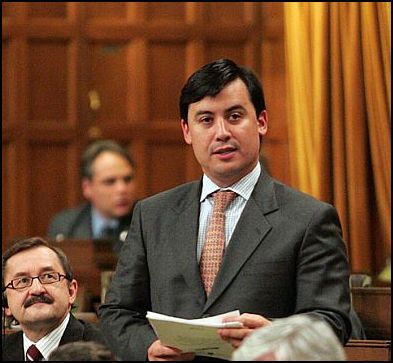
Michael Chong MPNational Assembly December 2013 vote

My chief problem with bill C-559 is the provision that the House caucus of a party can by majority vote on a secret ballot dismiss the Leader of the Party and then vote in a replacement to serve as interim Leader till the next leadership race.

This means 20 members of the Liberal caucus could vote out Justin Trudue as Leader and put in an interim Leader in his place. That’s just 20 Liberals in the caucus nullifying the votes of 81,736 liberals who voted for Justin Trudue in the leadership race and who represents 65% of all those registered to vote in that election.

In the NDP because they are 60% of the Caucus the NDP Quebec MPs could unite and vote out any Leader they didn’t like and thus in effect have a veto on the leadership of the NDP. So much for it being a NATIONAL party.

It is hereby moved that the Federalist members of Parliament be block voted in the negative on bill C-559 should it go to third reading as currently written.

Furthermore

It is hereby moved that the Federalist party support the following as an amendment to bill C-559.

I would change Mr Chang’s bill so that every registered political party is to have a Chief Election Officer with a term of ten years. Just like they must have an auditor.

There would be two classes of registered parties. The major parties are those that won a seat in Parliament or ran candidates in a majority of the ridings. That would be the following 5 parties Conservative, NDP, Liberal, Bloc Quebecois, and the Green party. The minor parties are all the other registered parties numbering 13 out of the 18 registered parties.

The major parties elect their CEO by a secret ballot of a caucus of their candidates in the last election. For the Conservatives, NDP, Liberals, and Greens this is a caucus of 300 plus members. The Bloc is a caucus of 75. It requires a two-thirds majority to elect and the same to suspended or dismiss.

The minor parties elect the CEO by a secret ballot of their membership. As with the major parties it requires a two-thirds majority to elect and the same to suspend or dismiss.

The vote is Yes / No for each candidate. If the winning candidate did not get the required two-thirds majority the term is for 1 year.